
6 Ways to Cure Powdery Mildew on Cannabis Organically
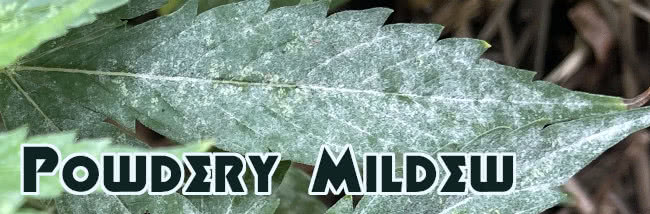
The ultimate guide to curing powdery mildew on cannabis organically. Learn how to eliminate powdery mildew on weed plants quickly during veg or flowering with safe, natural treatments. We cover the best organic powdery mildew control methods and new research-backed remedies to protect your marijuana crop.
What is Powdery Mildew?
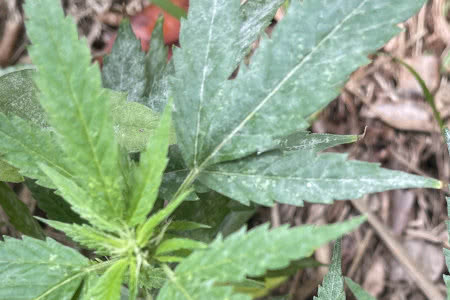
Powdery mildew (PM or WPM) is a fungal disease that affects a wide range of plants, including cannabis. Infections appear as white, talcum-like powdery spots on cannabis leaves and stems. Left untreated, powdery mildew can spread quickly and ruin a crop within weeks.
The species of powdery mildew that affect cannabis are somewhat unique compared to those on other plants. At least two species are known to infect cannabis: Leveillula taurica and Podosphaera macularis. These pathogenic fungi are obligate biotrophs, meaning they require a living host to grow.

Powdery mildew spores germinate in slightly acidic, moderate temperatures (64–75°F/18–24°C) and can withstand a range of climates once established. The fungi produce airborne spores that spread easily to neighboring plants. Overcrowded gardens, stagnant air, and high humidity create prime conditions for powdery mildew to take hold.
The fungus saps nutrients from the leaves, stunting plant growth and reducing yield. While saving a mature plant heavily coated in mildew is nearly impossible, early detection and prompt treatment can cure powdery mildew in the initial stages. Below we outline proven organic methods to treat powdery mildew on cannabis, as well as new organic treatments emerging from recent research.
Organic Fungicides to Stop Powdery Mildew
Potassium bicarbonate
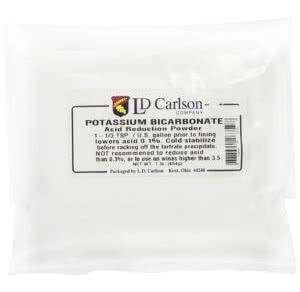
Overview: Potassium bicarbonate is a food-grade, alkaline powder that quickly kills powdery mildew on contact by rupturing fungal cell walls. Many commercial organic fungicide products for powdery mildew (e.g. GreenCure, Kaligreen) are simply potassium bicarbonate with an organic wetting agent (spreader sticker). You can save money by mixing it yourself. This natural mildew cure works by raising leaf surface pH, creating an inhospitable environment for the fungus.
Application: Dissolve potassium bicarbonate in water at about 0.5–2% strength (5–20 grams per liter). For example, Cannabis cultivation expert Ed Rosenthal suggests 1½ ounce (2.5 tbsp) per gallon of water. Add an organic wetting agent (like yucca extract or soap) for better coverage. Spray the solution liberally onto infected leaves and buds. Reapply weekly as needed. Potassium bicarbonate is safe to use through late flowering because it leaves minimal residue and is non-toxic.
Bacillus subtilis
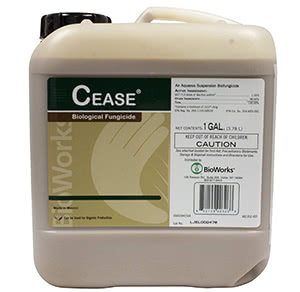
Overview: Bacillus subtilis is a naturally occurring beneficial bacterium that works as a bio-fungicide. Certain strains of this bacterium (e.g. QST 713) feed on powdery mildew as a nutrient source and secrete antifungal compounds. Popular products like Cease and Serenade contain Bacillus subtilis or closely related Bacillus strains to combat plant diseases. When applied to foliage, these bacteria colonize the leaf surface and inhibit powdery mildew growth. They are non-pathogenic to plants and animals.
Application: Bacillus subtilis fungicides are typically sold as liquid concentrates or wettable powders. Cease recommends ~30 mL (6 tsp) per gallon of non-chlorinated water for foliar spray. Alternatively, Companion Maxx may be used, which also contains the bacterium. Multiple applications (7–10 days apart) are often needed because spores in the grow area can re-infect plants.
Bacillus amyloliquefaciens
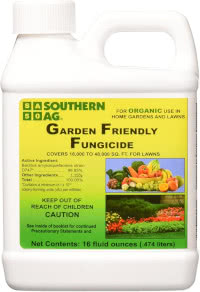
Overview: Bacillus amyloliquefaciens is a close cousin of B. subtilis that is also used as a biofungicide. In fact, some strains originally classified as subtilis (like the QST 713 in Serenade) were reclassified as B. amyloliquefaciens. This bacterium produces antifungal lipopeptides and enzymes that attack powdery mildew and other pathogens. Products such as Southern Ag Garden Friendly Fungicide and Double Nickel utilize B. amyloliquefaciens. These biofungicides help control powdery mildew on cannabis as well as leaf septoria, downy mildew, and Botrytis.
Application: B. amyloliquefaciens products are applied similarly: for instance, mix ~1 teaspoon of Garden Friendly Fungicide per gallon of water. Add a spreader sticker if available. Thoroughly mist infected and surrounding areas of the plant. Because this is a contact biocontrol, repeat applications every 5–7 days are recommended to catch new spores. Avoid spraying within a couple of days of harvest to prevent excess moisture on buds (though these products are safe up to day of harvest if needed).
Streptomyces lydicus
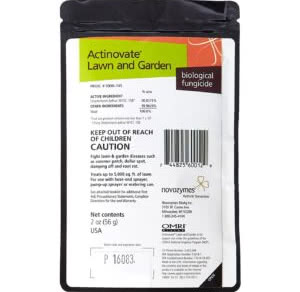
Overview: Streptomyces lydicus is another beneficial microbe used to fight fungal diseases. This actinomycete bacterium occurs naturally in soil and attacks pathogens like powdery mildew at the infection site. The strain Streptomyces lydicus WYEC 108 is the active ingredient in Actinovate, a biological fungicide. S. lydicus essentially parasitizes the mildew—when applied, it colonizes the plant surface and produces enzymes that break down the mildew’s hyphae, stopping its spread.
Application: Actinovate Lawn & Garden (or Actinovate AG for larger operations) comes as a powder. Dilute 2 teaspoons per gallon of dechlorinated water. For foliar use, spray the solution onto leaves, stems, and any visible mildew patches. Reapply every 7–14 days as needed. Streptomyces works preventatively and curatively in early disease stages. Increase the concentration (up to 4 tsp/gal) for heavy infestations.
Note: Store Actinovate in a cool, dry place; the live spores can lose viability if exposed to heat or moisture.
Citric acid
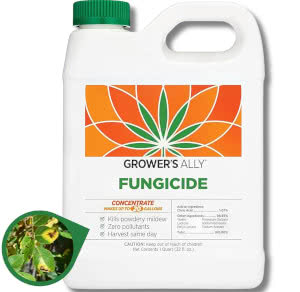
Overview: Citric acid (the same naturally occurring acid found in citrus fruits) is an organic fungicide that can eradicate powdery mildew. Food-grade citric acid is used in a newer product called Grower’s Ally Fungicide, which is OMRI-certified for use on cannabis and hemp. Citric acid acts as a natural disinfectant: it kills powdery mildew spores on contact by disrupting their cell membranes, and it also creates an acidic surface pH that inhibits fungal growth. Because it is gentle on plant tissue and leaves no toxic residue, citric acid has become a popular organic powdery mildew treatment late in flowering when other fungicides are too harsh.
Application: A typical citric acid foliar spray concentration is around 0.5–1% citric acid. Grower’s Ally Fungicide (citric acid 0.05% active ingredient) can be applied straight from the bottle or diluted if using a concentrate. Spray enough to wet all leaves and buds where mildew is present. Reapply every 5–7 days as needed, including up to the final days before harvest—this formula is safe to use through all stages of growth.
Caution: When using pure citric acid powder, mix carefully and adjust pH if needed, as overly acidic sprays (pH below ~4) could cause leaf burn.
Trifecta Crop Control
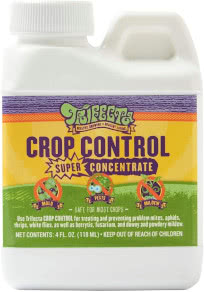
Overview: Trifecta Crop Control is an all-in-one natural pesticide and fungicide designed for cannabis cultivators. It’s a concentrated blend of botanical essential oils and soap, using nano-emulsified oils to maximize effectiveness. The active ingredients include thyme oil, clove oil, garlic oil, peppermint, rosemary, geraniol, and corn oil, combined with citric acid. These oils have antifungal and antibacterial properties, capable of killing powdery mildew on contact and preventing new spores from germinating. Trifecta also doubles as an insecticide/miticide, so it can combat common pests (mites, aphids, etc.) while treating mildew—useful in an integrated pest management approach.
Application: For preventative use, mix ½–1 ounce of concentrate per gallon of water. Apply as a fine mist over the entire plant once or twice weekly, using an atomizer or pump sprayer. For active infestations, a stronger mix of 2–4 ounces per gallon is used, and spraying every other day is recommended until the mildew is under control. Always follow with plain water rinse on buds if in flowering, to avoid any residual oil on the flowers (oils can affect taste if not broken down).
Caution: Do not apply essential oil sprays in intense light or high heat conditions, as they could cause phytotoxicity (oil + strong light can burn leaves).
Other Ways To Kill Powdery Mildew

Hydrogen Peroxide Bath (H2O2)
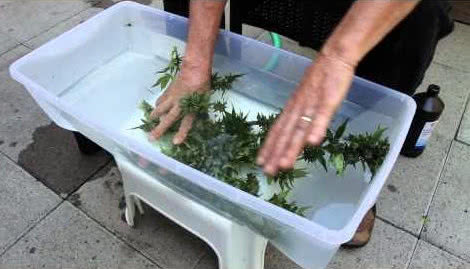
Overview: Hydrogen peroxide (H₂O₂) can be used to wash powdery mildew off harvested buds in extreme cases. This method, popularized by cannabis expert Jorge Cervantes, involves submerging freshly harvested buds in a dilute peroxide bath to kill and rinse away mildew spores. H₂O₂ is simply water (H₂O) with an extra oxygen atom—it oxidizes fungi on contact. This bud washing technique is a last resort to salvage mildew-contaminated flowers at harvest time.
Application: Use common 3% hydrogen peroxide (the kind from pharmacies). Mix roughly 1 part 3% H₂O₂ to 5 parts water in a large tub or bucket. Immediately after cutting your mature buds, dunk them in the peroxide solution. Gently swish for a minute or two—you may see white mildew and debris float off. Afterward, rinse the buds in a second bucket of clean water to remove any remaining peroxide and spores. Hang the buds with good airflow to dry them quickly (fans are recommended).
Note: Some terpenes (like limonene) are sensitive to oxidation and could be reduced by the peroxide wash. There isn’t conclusive research on whether washing buds in H₂O₂ significantly lowers potency or aroma, but most growers only do this if the alternative is losing the crop.

Baking Soda
Overview: One of the most popular powdery mildew solutions is to use baking soda (sodium bicarbonate) diluted in water as a foliar spray on plants. Baking soda works to raise the surface pH of the leaf to inhibit powdery mildew growth. Although this may offer limited benefit, as studies have shown sodium bicarbonate to be less effective than potassium bicarbonate.
Application: A typical mix is 1 teaspoon baking soda per quart of water (roughly 1% solution) plus a few drops of dish soap. This was part of the famous “Cornell formula” fungicide, along with 1½ teaspoons of light horticultural oil (e.g., Sunspray oil ). Baking soda sprays can provide some short-term control of light mildew by creating an alkaline surface.

Apple Cider Vinegar
Overview: Apple cider vinegar (ACV), a common pantry item, can be used in a pinch as a natural mildew remedy. Vinegar contains acetic acid (usually ~5%), which has antifungal properties. A mild vinegar solution will lower the leaf surface pH and can help control a light powdery mildew infection. This is a moderate-strength home remedy—it can suppress mildew growth but may not eradicate a heavy outbreak on its own.
Application: Dilute 2 teaspoons of apple cider vinegar per quart of water (approximately a 0.5% solution). Spray liberally onto affected leaves. It’s best to apply after removing any heavily infected leaves, so the vinegar can reach remaining mildew. Repeat every 3–4 days. ACV is most effective as an early-stage treatment or preventative foliar acidifier.
Caution: Avoid using a higher concentration, as strong vinegar can burn foliage. Also avoid spraying buds directly with vinegar, especially near harvest, as it can affect taste and invite other molds if overused.

Milk
Overview: Milk has been used as a natural foliar spray to combat powdery mildew, especially in outdoor organic gardening. Diluted milk spray works via the fermentation of lactose by naturally occurring Lactobacillus bacteria, creating antiseptic compounds and beneficial microbes on the leaf surface. Milk also contains potassium salts that may have a mild fungicidal effect. Some trials on cucurbits and grapes found that milk sprays were as effective as chemical fungicides for preventing powdery mildew.
Application: If you try milk, use skim or low-fat milk, as high-fat dairy will spoil on the plant and smell bad. Dilute 1:9 (some go as strong as 1:5 milk:water). Spray in early vegetative growth or early flower at the latest, as applying milk to buds can create a film that encourages gray mold or attracts pests. Rinse plants with plain water a day or two after milk treatment to avoid residue build-up.
Note: An alternative approach used in Korean Natural Farming is to spray fermented milk (lactic acid bacteria serum) for similar beneficial effect. This harnesses Lactobacillus more directly and can help suppress fungi naturally, though empirical data on cannabis is scant.

High pH Alkaline Water
Overview: Simply raising the pH of water and spraying it on plants can inhibit powdery mildew. By using alkaline water (pH ~8–9), you create leaf conditions where mildew struggles to survive. Some growers use reverse osmosis (RO) water adjusted to a high pH as a very safe foliar spray during flowering when other sprays are not desirable. This method is non-toxic and leaves no residue.
Application: Adjust clean water to about pH 8.0–8.5 (a tiny amount of potassium bicarbonate can do this, or use a silica additive which is very alkaline). Spray plants thoroughly. Keep in mind, alkaline water alone might not cure visible mildew spots (those you should trim off or treat more aggressively). But it can help knock back unseen spores and prevent new growth.

Neem Oil
Neem oil was historically a go-to organic fungicide and pest repellent, but we no longer recommend neem oil for powdery mildew on cannabis. Neem (derived from the neem tree) contains azadirachtin, a natural pesticide. While it can prevent mildew, there are concerns about using it on cannabis:
Some reports and discussions link azadirachtin exposure to Cannabis Hyperemesis Syndrome (CHS)—a condition causing severe vomiting in some cannabis users. Though scientific evidence is inconclusive, many growers avoid neem out of caution, especially on plants destined for consumption. High doses of neem are known to be toxic if ingested, so any residue on buds is undesirable.
Furthermore, neem oil makes plants oily and smelly—another reason to avoid it altogether, especially during the cannabis plant’s flowering cycle.
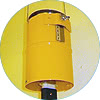
Sulfur Burners
Overview: Elemental sulfur has been used for centuries to control powdery mildew. In cannabis growing, sulfur burners (also called sulfur vaporizers) heat sulfur to evaporate it into the grow space. The sulfur vapor and particles settle on plant surfaces, effectively killing powdery mildew and preventing new infection. Sulfur is very effective against mildew; spores cannot survive prolonged sulfur exposure. However, there are significant downsides when it comes to cannabis:
- Plant damage: If used improperly (too high concentration or too late in growth), sulfur can burn leaf tissue. It’s phytotoxic at temperatures >90°F and can cause leaf spotting or chlorosis if overused.
- Bud quality: Sulfur on cannabis buds produces a harsh smoke and unpleasant taste. It can also nullify predators or other IPM methods. Never burn sulfur once plants are in flowering or within a few weeks of harvest. Most growers only use it in veg or early pre-flower if at all.
- Safety: Sulfur dioxide gas (from burners) is irritating and potentially harmful to humans. You must ventilate well and avoid breathing it. Always follow the burner’s safety instructions and consider wearing a respirator when entering a room after a sulfur burn. Read this safety sheet for more information.
Application: If you decide to use a sulfur burner, do it in vegetative stage or very early bloom. Remove or cover your carbon filter (sulfur can damage the carbon). Hang the burner and follow the product’s guidelines—usually running it for a few hours with fans off, then ventilating. One treatment can drastically knock back mildew. Just be sure to thoroughly air out the space and wipe off any visible sulfur residue afterward.

UVC Light
Shortwave UV radiation (UVC) kills powdery mildew, but it is also very dangerous to humans and plants with excessive exposure. While the sun produces UVC radiation naturally, it is absorbed by the ozone layer, so we normally don’t encounter it at ground level. There are UVC lights for sale marketed to cannabis growers—they must be kept at minimal intensity and used with protective shields to prevent overexposure. For more information, read this UVC hazards sheet.
Of the UVC methods available, manually applying UVC light to mildew-infected plants presents the most danger. Direct UVC light is harmful to human skin and eyes, and can also damage plant tissue if the dose is too high—there’s a fine line between eliminating powdery mildew with UVC and burning the plant’s DNA.
The safest UVC solution for powdery mildew is purely preventative—installed in protected germicidal air filtration units. UVC air filtration can be integrated into heating, air conditioning, and ventilation systems to disinfect the air while avoiding direct exposure to plants and humans.
Powdery Mildew Prevention

The adage “prevention is better than cure” holds very true for powdery mildew. Once you’ve gotten rid of an infection, or better yet before it ever starts, you should adopt practices that prevent powdery mildew from gaining a foothold. Here are key strategies to keep your cannabis plants mildew-free:
Clean and Quarantine
Cleaning the grow site and quarantining plants. Hygiene is your first line of defense. The goal is to quarantine plants until powdery mildew is completely eliminated, including dormant spores that may be hiding nearby. If you had an outbreak, assume spores are everywhere—they can hide in crevices, on trellis nets, in ventilation ducts, etc. Also suspect are any means of reintroducing the mildew into the grow room via infected clones, clothing, etc.
Indoor growers will want to wipe down all surfaces and grow equipment from top to bottom with a bleach-water solution to kill any residual spores. Ozone generators can also be used to sterilize grow rooms; however, beware—these are dangerous at high concentrations.
If you discover powdery mildew on a plant, remove it from the room immediately to a “sick bay” area for treatment. Also remove and safely discard any heavily infected leaves or buds—do not leave diseased material lying around. Reducing the spore load is crucial. Bag up any waste and take it far from your grow.

Climate Control
Environmental control is key to preventing powdery mildew. Powdery mildew thrives in humid, stagnant air. Indoor growers should maintain relative humidity (RH) around 45-55% during veg and under 50% in bloom to make conditions less favorable for mildew.
Ensure you have plenty of air exchange and circulation: use oscillating fans to keep air moving across all plants, and vent humid air out. Stale pockets of humid air around leaves are breeding grounds for PM. If necessary, invest in a dehumidifier to keep RH in check, especially during lights-off when humidity often spikes.
Powdery mildew prefers moderate temperatures (~70–80°F). Interestingly, it doesn’t like it very hot; temps consistently above 86°F can inhibit some powdery mildew species. However, cranking up heat can stress plants, so don’t burn your ladies trying to bake out the mildew.
A little pruning to remove inner leaves can improve light penetration and reduce humidity pockets. Remember, an environment that’s comfortable for your plants but a bit challenging for fungi is what you’re aiming for.
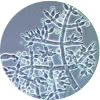
Trichoderma
Trichoderma is a genus of beneficial fungi commonly used in agriculture to combat pathogens. Certain strains of Trichoderma in the soil or root zone can actually help protect plants from foliar diseases like powdery mildew by inducing systemic resistance, priming the plant’s immune system to fend off attackers.
While there have been no studies directly related to the powdery mildew species that grow on cannabis, peer-reviewed studies of powdery mildew on other plants have shown that application of the species T. harzianum in soil resulted in a 75–90% reduction of powdery mildew infection on leaves. Researchers speculate that the enzymes Trichoderma produces help the plant resist powdery mildew, among other infections.
Trichoderma can be found in products such as Soil Blast on Amazon. However, over-application of Trichoderma may create problems with other beneficial fungi for plants—mycorrhizal fungi.

Silicon (Si)
Silica (silicon dioxide) is created when silicon comes into contact with oxygen. In relation to powdery mildew, silica aids in strengthening the epidermal layer of plants, forming fortified areas that may protect them from powdery mildew infections. Note: silica is naturally alkaline and will raise the pH of a nutrient solution.
Popular liquid formulations of silica include Armor Si by General Hydroponics and BulletProof by Cutting Edge.
Methods of increasing Si in the soil or root medium include diatomaceous earth, greensand, pyrophyllite clay, and high-silica fertilizers such as Pro-TeKt.
FAQ
Is Powdery Mildew Systemic?
One of the most commonly debated issues among cannabis growers is whether or not powdery mildew is systemic to the plant.
The leading researchers of powdery mildew in cannabis, Medicinal Genomics, aren’t quite sure of the answer yet. Read their response to the question here: medicinalgenomics.com/powdery-mildew-systemic
In any case, the term systemic might not be the right word to use.
Is Powdery Mildew Dangerous to Smoke?
There isn’t enough evidence to define any dangers of smoking powdery mildew. It isn’t considered a human pathogen and, at worst, may cause allergenic symptoms. The main gripe about powdery mildew on buds is the nasty appearance it creates.
This is not the case for another mold on cannabis, Botrytis cinerea, which should never be smoked.
As for making extraction/concentrate products with powdery mildew-infected buds, ethanol-based extraction would probably burn off most of the spores. Still, it’s hard to endorse smoking any derivatives of powdery mildew-infected buds until further research is done.
How does Powdery Mildew Infection Start?
The infection starts when a spore (conidium) lands on a leaf. Once the spore germinates, it quickly develops an appressorium—a growth structure that attaches the spore to plant tissue. The fungi then pierce the dermal tissue with their taproot, called a haustorium.
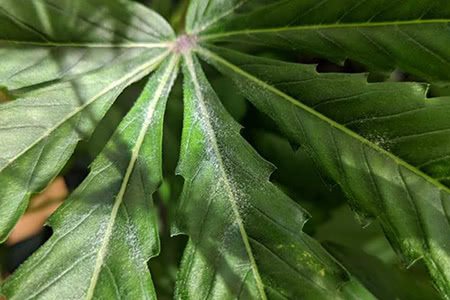
The haustorium is used to absorb nutrients from inside the plant cell, causing weakening of the leaf and reduced photosynthetic ability. The haustorium siphons plant nutrients and transfers them to the fungi, stunting the plant and slowing growth.
How does Powdery Mildew Spread?
Once the powdery mildew infection has started, a mycelium network is quickly developed throughout the plant.
Spores of both species are spread through the air. P. macularis spores also migrate with moving water, such as drops of water falling from leaf to leaf or being blown by the wind to other plants.
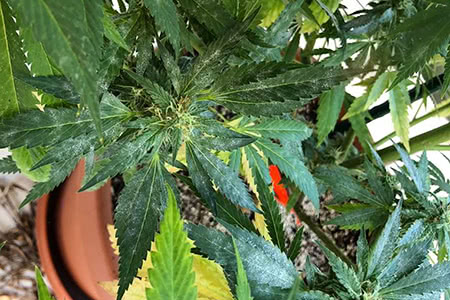
Hardy spores and spore structures, called cleistothecia, can survive through long periods and overwintering.
Research has shown it takes roughly 20–40 dpi (days post-infection) from the start of a spore infection to when it produces spores of its own.
Where does Powdery Mildew Grow?
Powdery mildew spores germinate in slightly acidic conditions with temperatures ranging from 64–75°F (18–24°C). Once germinated, the fungi can withstand a wider range of climates. Infectivity of P. macularis conidia is greatly reduced at temperatures over 86°F (30°C).
These are many of the same conditions plants prefer, which makes fighting off powdery mildew all the more difficult.
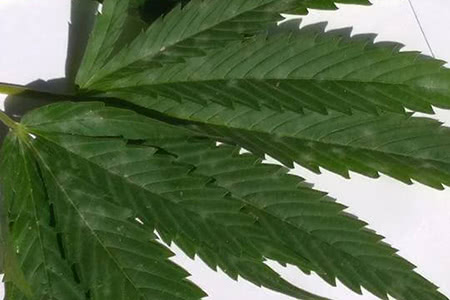
Stagnant air, low-light greenhouses, and indoor grow rooms lacking proper ventilation are ideal environments for powdery mildew to reproduce. Plants that have been overcrowded—grown Sea of Green or SCROG style—may be problematic, as they trap moisture.
There isn’t much evidence to suggest powdery mildew jumps from species to species.
What does Powdery Mildew do to Cannabis?
Powdery mildew hinders the plant’s ability to collect nutrients through its leaves (photosynthesis). As the mildew spreads throughout the cannabis plant, the leaves become unable to collect nutrients, bringing the plant into a state of slow, stunted growth.
Powdery mildew spreads quickly in cannabis, often establishing itself in just a few days. Left untreated, it will effectively ruin the crop.
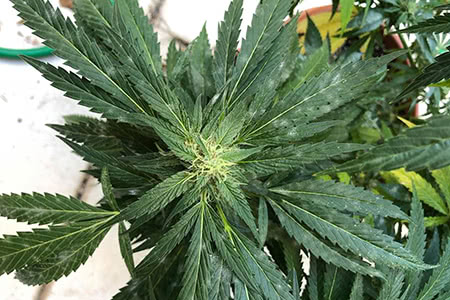
While bringing back a mature plant covered in PM can be nearly impossible, getting rid of it on a young plant is easy enough. Eliminating an outbreak is easier the earlier it’s spotted.
How to Apply Foliar Spray Fungicide
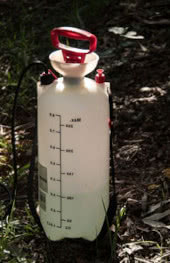
A simple garden pump sprayer like this one on Amazon is all you need for most applications. Even a punctured water bottle works in a pinch. Atomizers and misters make a finer spray but can clog.
The spray must be applied to both the top and undersides of infected leaves, along with stems, branches, and stalks.
You may consider laying down a cover under the plants to avoid fungicide dripping into the root zone. Although these powdery mildew remedies are organic, they can still be harmful to beneficial microorganisms in the soil.
Most remedies require more than one application to be truly effective. Moisture may wash the foliar spray off; even morning dew on plants can remove foliar applications from leaves. Perhaps the best time to spray outdoors is before noon on a dry, sunny day. Indoor growers usually spray before lights out.
Using an organic wetting agent (also called a spreader-sticker) helps the spray stay on longer.
Breeding For PM Resistance
Certain strains of cannabis have natural resistance to powdery mildew infection. What cannabis breeders can do is work with these genetic lines through selective breeding to further increase their resilience.
https://moldresistantstrains.com/wp-content/uploads/2018/10/breeding-for-pm-resistant-strains-1.jpg
Visit our Mold Resistant Strains homepage for a range of quality genetics. We’ve got everything from popular feminized, regular, and autoflower seeds all the way to niche landraces, jungle sativas, and mountain indicas.
References
Listen to the Shaping Fire podcast, ep. 28, for an informative conversation on powdery mildew. Featuring special guest Kevin McKernan of Medicinal Genomics.
You may enjoy further learning about powdery mildew through these reference links:
- Hemp Diseases and Pests: Management and Biological Control (Amazon link)
- newcropsorganics.ces.ncsu.edu/2010/07/the-cornell-formula-fungicide-an-example-of-why-you-need-to-check-out-your-internet-information-sources/
- merryjane.com/health/the-curious-case-of-cannnabis-hyperemesis-syndrome
- link.springer.com/article/10.1023/A:1009919417481
- https://www.sciencedirect.com/science/article/abs/pii/S0261219499000460
- https://extension.oregonstate.edu/crop-production/hemp/management-powdery-mildew-hemp-pacific-northwest
Additional references linked in-article.
If you have any questions, experience, or comments about powdery mildew on cannabis, please comment below!


Comments
Replying to @Pamela Owen
Replying to @Pamela Owen
Replying to @Hutchy
Replying to @Hutchy
Replying to @Pamela Owen
Replying to @Anon
Replying to @Anon
Replying to @Anon
Replying to @Anon
Replying to @MidnightRider
Replying to @Nugs808
Replying to @Nugs808
Replying to @Nugs808
Replying to @JR Malesic
Replying to @Jared Cox
Replying to @JR
Replying to @Dino
Replying to @Jake M
Replying to @Crystal Hanson
Replying to @J
Replying to @Sandra-Lee Scalia
Replying to @Jared Cox
Replying to @Sandra-Lee Scalia
Replying to @Beau Hawkes