
Work Trade on Farms and Grow Weed in Hawaii
Live and grow weed in Hawaii on a budget. It's easier than you think. Work trade on farms to save money.
Hawaii's Medical Cannabis Program allows registered cardholders to grow cannabis at home or a caregiver's location.
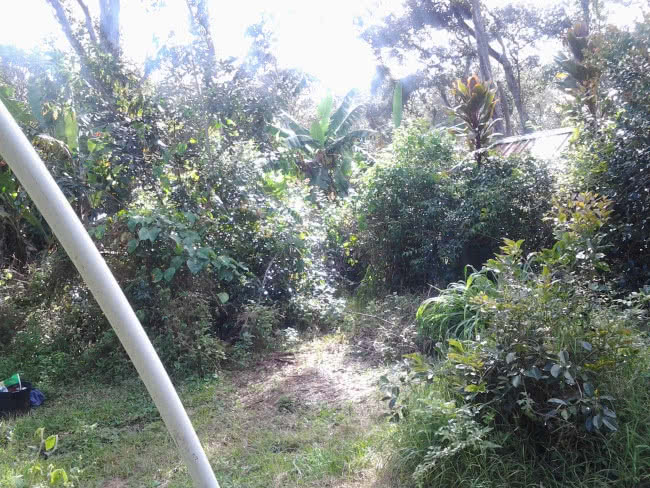
Moving to a new place and starting over from scratch can be intimidating and costly, but if you do it right, you don't need to spend that much at all.
If you're looking at purchasing property in Hawaii, but don't want to commit before you've lived there long enough to get a taste for it, then consider other affordable accommodations—like renting somebody's cabin or doing work trade for rent.
WWOOF
 WWOOF stands for Willing Workers on Organic Farms. This program is basically as a classified ads directory for farmers who are looking for work in exchange for housing and/or food supplies. Farmers simply post what they need (the hours of work and type of work) in exchange for what they offer (a place to stay and food arrangements, if any).
In most cases, the rent is paid by your work on the farm.
It's up to each farm host to decide what they'll offer for the work they want to be done. Some farms expect very long hours of work while others only ask for a few hours per week.
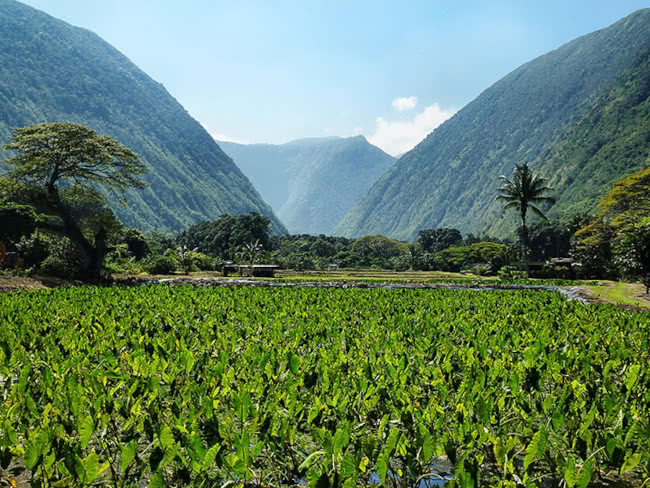
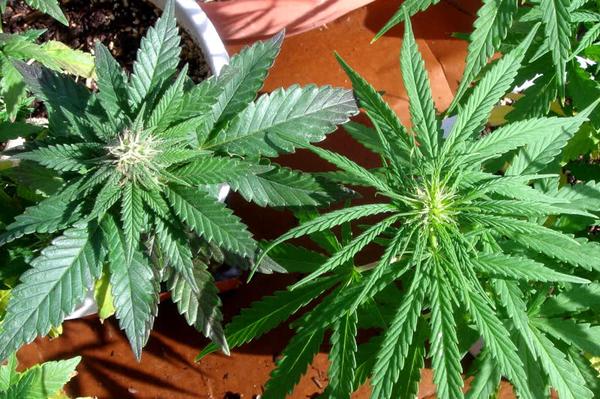
There's a big community of cannabis growers and enthusiasts in Hawaii, many with their roots in guerrilla growing. Thanks to Hawaii's Medical Cannabis program, growing up to ten plants on your own property can now be done legally.
The Poor Man's grow
If you can't get your hands on some land of your own, perhaps you can strike a deal with another property owner in order to grow cannabis crops there. A lot of people are doing caretaking gigs because the owners want someone guarding their property. Win-win.
If you don't have the cash to start growing, you gotta make do with what you got.
The cheapest option is to do an outdoor grow with no lights. Simply seeds and soil. If you can afford a cheap LED grow light, you may manipulate the plants' flowering cycle with only a few hours of artificial light after the sun goes down.
Hawaiian strains are here and many are adapted to the outdoor climate. If you make some 420 friendly connections throughout the Islands, you could possibly score some for free. Buying seeds from a marijuana seed bank is always a good option.
Some people have lava rock for their backyard but if you're lucky enough to have rich Hawaiian soil, just know that it's slightly acidic and very young (Big Island is the youngest island being only 800,000 years old). Calcium helps—lime and oyster shell flour are great sources.
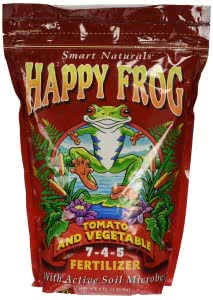 Foxfarm's Happy Frog is an affordable organic dry fertilizer. It's filled with a myriad of the best known natural fertilizers and supplements—all in one bag.
Happy Frog also comes packed with mycorrhizal fungi inoculant, which is key to taking advantage of the nutrients in your soil and bolstering micro-life.
Happy Frog contains many ingredients that slowly release nutrients, keeping them constantly available for your plants with correct use and application.
Dolomite lime is an essential additive for Hawaii's acidic soils. Lime raises the pH of the soil it is added to, and a better-balanced pH will make more nutrients available for your plant to use.
Lime is also a great source of calcium, which local soils are usually lacking. There are only two amendments you "really need" for growing in Hawaii's soil, and this is one of them (the other is nitrogen).
This dolomite lime mix is a super-fine powder for a quicker pH buffering effect.
Pointers for Growing Weed in Hawaii
- A grow spot should ideally have at least five hours of full sun per day. This will be crucial as the plants are nearing harvest. If they are in the shade all day, mold and bud rot will become a problem.
- The sun moves south as fall approaches and north again, coming into spring. Ensuring your plants have good sun exposure during their flowering cycle is a key to growing plump buds.
- Amend your soil and plant your seeds—don't use all the fertilizer at once, it will be too much for your tender seedlings, and they'll burn right up.
- You can add more nutrients later as your plants mature. Just sprinkle fertilizer onto the topsoil and lightly work it in. Also, making spikes (small, finger size holes in the soil around your plant that you fill up with dry fertilizer) works well as nutrient supplements.
- Fan leaves—to pluck or not to pluck? In general, outdoor growers defoliate less than indoor growers. Defoliation is highly debated and the choice is yours.
- Watch out for moldy buds. Mold can be surprising! Gray mold (Botrytis cinerea) will often come in unexpectedly from inside of the bud, developing into a devastating problem if left unnoticed. Be sure to remove any mold infected buds immediately and clean the surrounding plant matter with rubbing alcohol.
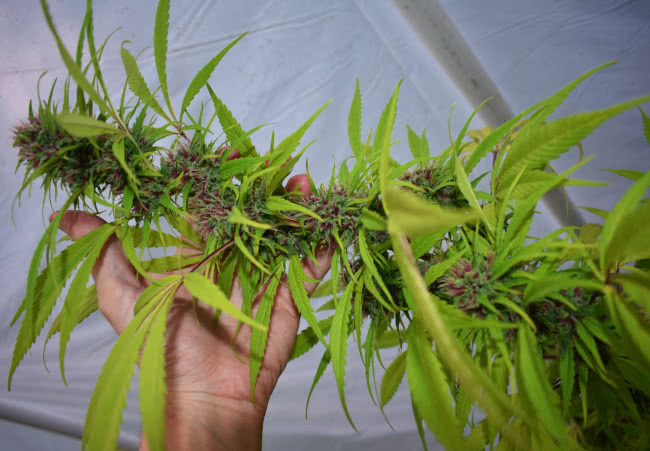
Drying weed in Hawaii
Hawaii is a dank, humid place filled with mold spores (in most areas). Humidity control is needed to dry your buds properly. A dehumidifier is recommended if you have the electricity. If you're living off-grid and want to get creative, continue reading below.
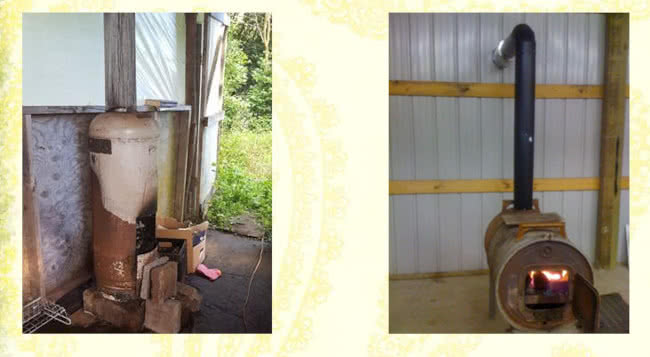
How to dry buds in the rain?
You can make a stove out of a propane tank by cutting out the front and top using a Sawzall. Just buy some cheap chimney pipes and jimmy together a chimney cap with a piece of scrap tin. Then fill in the gaps with aluminum foil. Read more here—DIY propane wood stove.
Install this wood stove to keep your room at a lower humidity. With a small fire it heats up the room a bit to speed up the drying process.
- Keep your buds away from the stove.
- Don't go over 82°F. High heat can damage precious trichomes.
- Drying marijuana too quickly will make it taste harsh!
Enjoy

Time to roll up some monster fatties in celebration of freshly harvested home-grown pakalōlō!
If you don't know what long season and short season are in Hawaii, read this: Growing Medical Marijuana in Hawaii.

Comments
Replying to @Para Frost
Replying to @Para Frost
Replying to @Para Frost
Replying to @Dino
Replying to @Michael Weyhrauch
Replying to @Tyson Harrison